1. Dr. Luciano Rebouças de Oliveira
(Universidade Federal da Bahia and Fiocruz Bahia, Brazil)
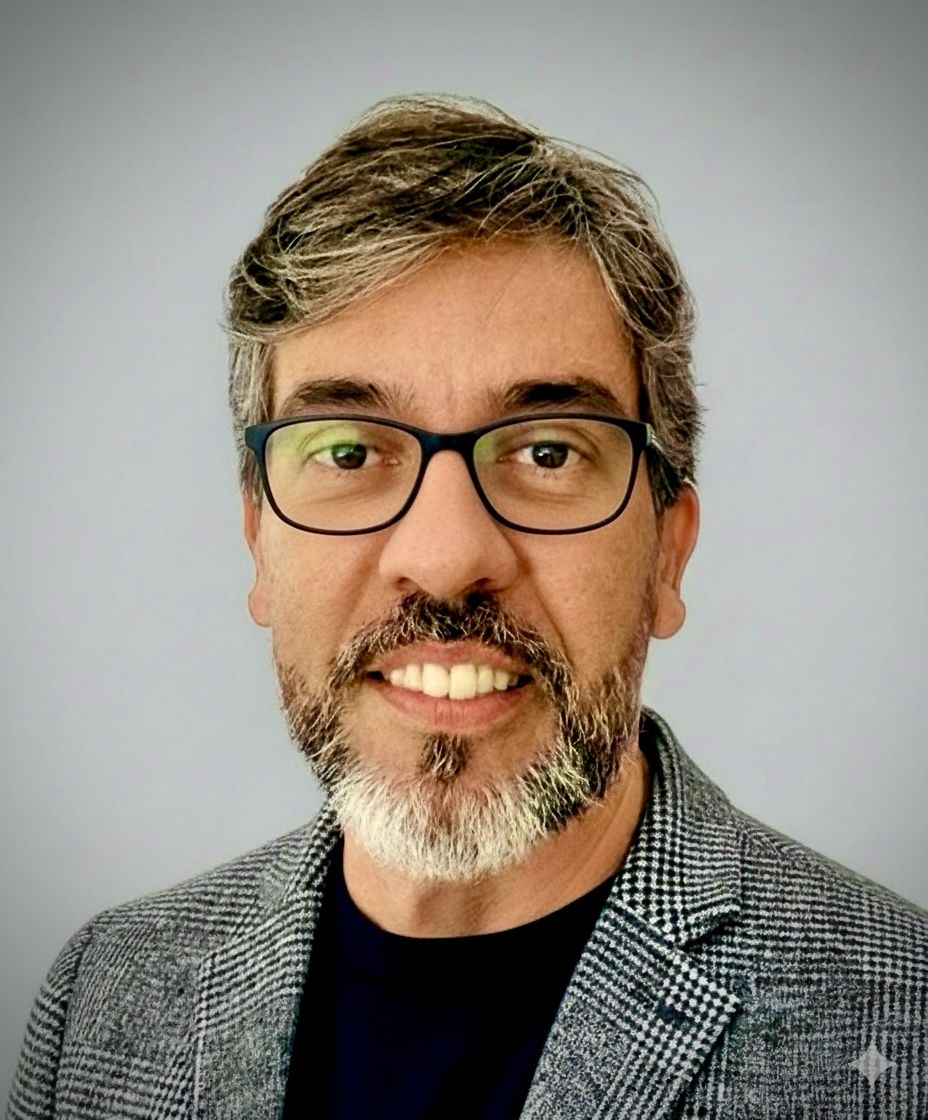
Luciano Rebouças de Oliveira holds a Ph.D. in Electrical and Computer Engineering from the Institute of Systems and Robotics, University of Coimbra, Portugal. He is an Associate Professor at the Institute of Computing, UFBA, leads the Intelligent Vision Research Lab (iVisionLab, http://ivisionlab.ufba.br), holds a CNPq Research Productivity Fellowship, and has a concurrent appointment at Fiocruz-Bahia, where his work bridges computer vision and public health. A specialist in Computer Vision and Machine Learning, his applied research spans robotics, smart cities, biometric systems, and biomedicine, with particular emphasis on computational medicine; he created and coordinates PathoSpotter, an AI-assisted digital pathology platform developed with Fiocruz-Bahia for the analysis of renal biopsies, which underpins several projects, including the National Institute of Science and Technology in Molecular and Computational Pathology (INPACT), which he also coordinates.
Keynote Title
Computer Vision for Sustainable Public Health: Lessons from Building Computational Pathology Under Real-World Constraints
Abstract
Pathology is a bottleneck in many health systems. Specialists are scarce, slide analysis is slow, and diagnostic quality varies widely across regions. Computer vision and deep learning can help, but moving a model from a benchmark to a public health setting exposes challenges that rarely appear in publications: limited and heterogeneous data, differences in staining and acquisition, scarce expert annotation, and the need for results that clinicians can inspect and trust. This talk presents the experience of the PathoSpotter project, an AI-assisted digital pathology platform developed with Fiocruz-Bahia for the analysis of renal biopsies, and of the INPACT national institute that builds on it. We discuss how the group has addressed these constraints with few-shot and weakly supervised learning, and how pathology foundation models and prototype-based representations support semantic image retrieval that remains consistent across stains and datasets. We also discuss explainability and human-in-the-loop design as requirements for clinical adoption, and the engineering choices that keep such systems affordable and maintainable in resource-limited settings. Finally, we reflect on what sustainable AI means in healthcare: models that need less supervision and less computation, tools that fit into existing workflows, and open resources that other institutions can reuse. We argue that these principles transfer to other engineering domains where AI must deliver lasting value under practical limits.
2. Dr. Christos Zachariades
(Liverpool University, UK)
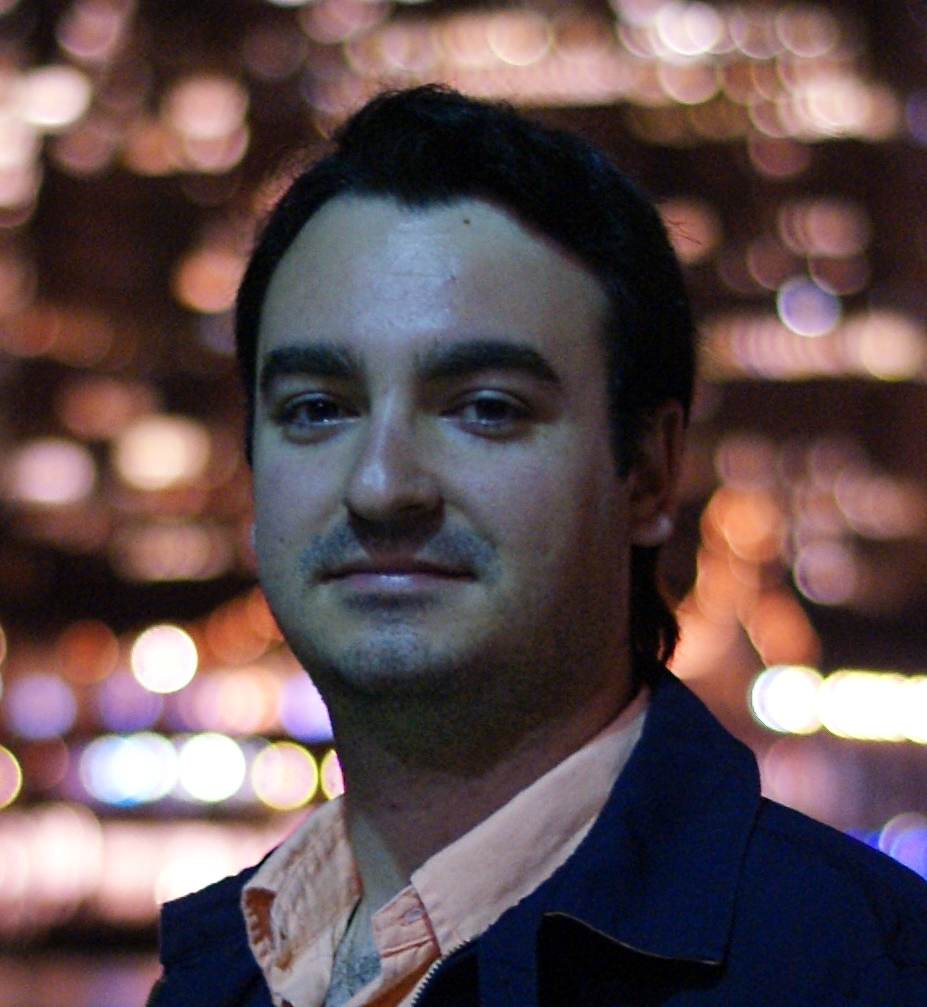
Christos Zachariades received the BEng (Hons) in electrical and electronic engineering, in 2009, the MSc in electrical power systems engineering, in 2010, and the PhD in electrical and electronic engineering, in 2014, from the University of Manchester.
He was previously a Senior Test and Development Engineer with HVPD Ltd, and a Lecturer with the University of Manchester, and is now a Senior Lecturer in Electrical Energy with the University of Liverpool. His research focuses on the condition monitoring and diagnostics of high voltage equipment, overhead transmission lines and high voltage test techniques.
Dr. Zachariades is a Fellow of the Higher Education Academy (FHEA), a Chartered Engineer (CEng) and a member of the Institution of Engineering and Technology (IET), as well as a member of the Cyprus Scientific and Technical Chamber (ETEK).
Keynote Title
Bridging Artificial Intelligence and Engineering: Data-Driven Diagnostics for Critical Infrastructure
Abstract
Artificial intelligence is rapidly reshaping the way engineering systems are monitored, managed, and maintained. However, the successful adoption of AI in critical infrastructure requires more than powerful algorithms; it demands a close integration between data-driven methods and domain expertise. This keynote presents recent advances in combining sensing technologies, machine learning, and engineering knowledge to enhance the diagnosis and condition assessment of power system assets. Using examples from high-voltage equipment, rotating machines, and infrastructure monitoring, the talk illustrates how AI can improve reliability, support proactive maintenance strategies, and enable more informed operational decision-making. The presentation concludes by discussing emerging opportunities for AI-enabled infrastructure resilience in an increasingly electrified world.
3. Prof. Dr. Melinda
(Universitas Syiah Kuala)
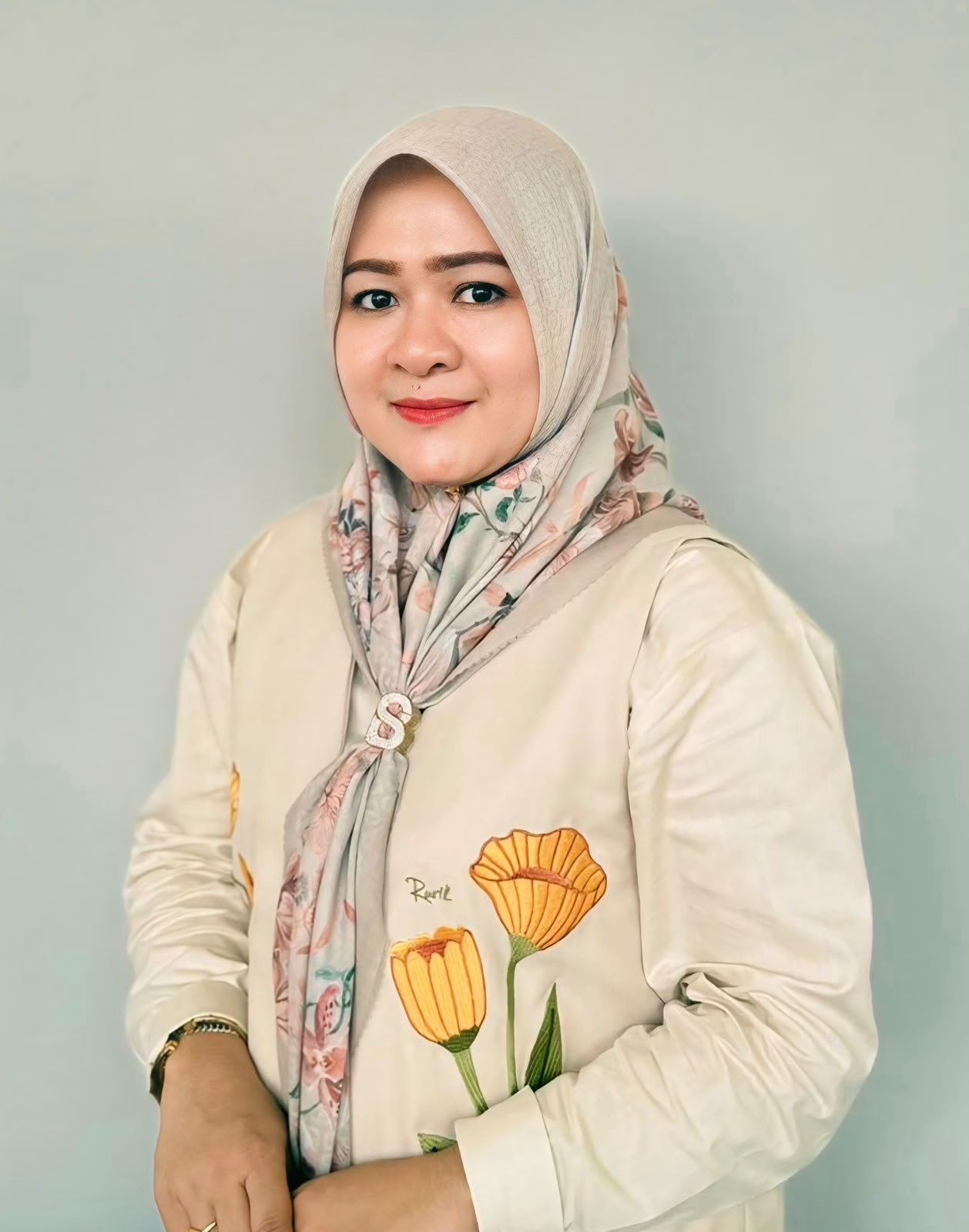
Prof. Melinda holds a Ph.D. in Electrical Engineering from Universitas Indonesia. She is a Full Professor at the Department of Electrical and Computer Engineering, Universitas Syiah Kuala (USK), Indonesia, where she teaches digital signal processing, biomedical signal processing, probability and statistics, and research methodology.
Her research focuses on signal processing, artificial intelligence, biomedical engineering, and Internet of Things (IoT), with particular emphasis on EEG and ECG analysis, autism spectrum disorder (ASD), medical imaging, and wearable health technologies.
She has led numerous nationally funded research projects and has authored more than 80 scientific publications in international and national journals, including IEEE Access, Scientific Reports, Diagnostics, and Applied Sciences.
She is also the author of several books on signal processing, artificial intelligence, and biomedical engineering, and actively develops AI-driven healthcare technologies for early disease detection and clinical decision support systems.
Keynote Title
Explainable AI for EEG-Based Autism Screening: Research Progress and Lessons from a Clinical Decision Support Prototype
Abstract
Interpreting an EEG-based screening result requires understanding how the model was evaluated, how stable its predictions are, and which signal patterns influenced its output. This keynote traces the research at Universitas Syiah Kuala that led from EEG filtering and feature extraction to NeuroScreen, a web-based clinical decision support prototype developed within the Riset Kolaborasi Indonesia (RKI) programme to support autism spectrum disorder (ASD) screening. In a preliminary experiment, 16-channel EEG recordings from 18 participants, nine with ASD and nine controls, yielded 8,079 four-second segments. An EEGNet-based model trained on time–frequency representations achieved a mean segment-level accuracy of 97.13% across nine folds. This result characterizes performance on EEG segments; generalization to new individuals remains to be established. Using a NeuroScreen report, the keynote illustrates how probability calibration informs the interpretation of model scores, how Monte Carlo dropout estimates variability across repeated predictions, and how Grad-CAM highlights time–frequency regions that contribute to a class score. The closing discussion outlines three priorities for clinical evaluation: testing the model in independent cohorts, measuring how predictions change when highlighted signal regions are masked, and assessing how healthcare professionals interpret the report.